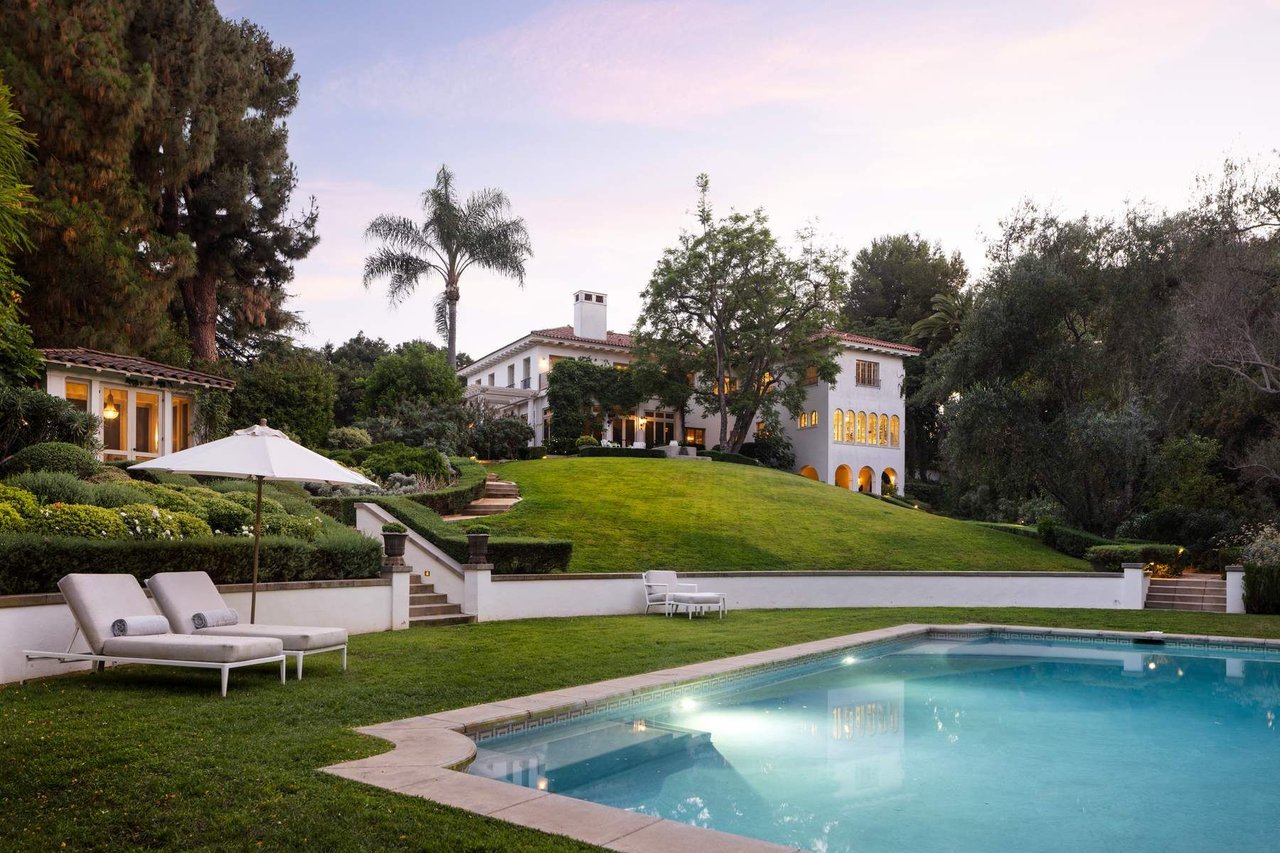
Two homes on the same Potomac-facing block in Boulevard Acres can list within a few hundred thousand dollars of each other and still be priced for different reasons. Why?
The short answer is that the number on the sign is the sum of a view, a lot, and a bundle of regulatory permissions that most buyers never look up. In the Mount Vernon corridor along E Boulevard Drive, Southdown Road, Northdown Road, and Arcturus Lane, that third variable is the one that separates the comps. It also happens to be the one the median price cannot show.
The 100-foot line that decides what you can actually build
Boulevard Acres sits in Fairfax County, and every parcel with frontage on the Potomac or on a perennial tributary carries a Resource Protection Area running 100 feet inland. Under the Chesapeake Bay Preservation Ordinance, that buffer is a functional development freeze. The county's own guidance states that within the RPA, no development, land disturbance, or vegetation removal is allowed without prior approval, and that includes clearing dead trees, invasive plants, or brush.
For a buyer picturing a new pool, a screened porch off the river-side elevation, or a detached studio at the back of the yard, the RPA is not a footnote. It is the site plan.
A lot that reads as three-quarters of an acre on tax records may only offer a fraction of that as buildable ground once the buffer is drawn. Two properties at the same list price can decompose very differently: one with the primary house sited generously landward and 60 percent of the lot outside the RPA, another with the main structure already pressing into the buffer and no room to add without an exception from the Chesapeake Bay Exception Review Committee. The exception process is a public hearing, not a permit desk. Sellers who have been through it understand what that adds to a construction timeline.
Alexandria's own guidance on the same statewide regime is blunt about what the buffer means for accessory structures: existing sheds may remain and be maintained, but they cannot be expanded, and new ones cannot be built inside the RPA without an exception. That single rule, from the city's Resource Protection Areas page, quietly reprices the "we'll just add a pool house" plan that many buyers assume travels with a waterfront lot.
Why an existing pier is worth more than a view
Because docks, piers, and outfalls are classified as water-dependent uses, they are among the few structures a jurisdiction will allow to be built at the water's edge, and only then with a Water Quality Impact Assessment and, in most cases, a formal exception. That regulatory difficulty is exactly why an already-permitted, in-place deepwater pier prices at a premium over a comparable water-view lot without one.
You can see the spread in the current tape. A property at 7831 Southdown Road came to market at $6.85 million in late 2025 with a deepwater pier configured with two boat lifts and a guest house, according to the year-end Alexandria luxury coverage. At the ceiling of the neighborhood, 7979 E Boulevard Drive listed on May 5, 2026 at $60 million, on roughly 16 acres with a private dock offering direct Potomac access and, per the MLS listing (VAFX2293288), 700 feet of frontage described as the largest in Fairfax County. Both prices are doing something more than paying for a view. They are paying for infrastructure that a new buyer, on a bare shoreline, would have to spend years and a WQIA to replicate, if the exception review allowed it at all.
The practical read: if a listing conveys a functioning pier with current permits, verify the file. If a listing shows river frontage but no in-water structure, treat the pier as a future project subject to Fairfax County's exception process, not a checkbox.
FEMA, finished-floor elevation, and the 30-year assessment
The second regulatory layer arrives from the federal side. Parcels along the Potomac fall inside FEMA-designated Special Flood Hazard Areas, which trigger minimum finished-floor elevations, floodproofing standards, and constraints on below-grade improvements. That has real underwriting consequences. Elevation certificates drive flood insurance premiums, and premiums drive monthly carrying cost more than most buyers estimate before they see the quote.
Layered on top of that, Virginia now requires a Resiliency Assessment for development and redevelopment within an RPA. The City of Alexandria's WQIA form, updated October 2025, references the same statewide framework applied by Fairfax reviewers: applicants must model 30-year vulnerability to flooding, storm surge, and sea level rise using tools developed by NOAA and the Virginia Institute of Marine Science. That assessment now sits inside the review file for any material addition on a river-side Boulevard Acres lot. Buyers planning to tear down and rebuild, rather than move in and live with the existing footprint, should read that horizon carefully.
Two lots, same price, different math
The table below is a stylized decomposition. It is not a comp; it is a way of showing where the money actually goes when two waterfront listings look identical on the portals.
| Variable | Lot A (main house sited landward) | Lot B (main house near the buffer) |
|---|---|---|
| List price | $5.85M | $5.85M |
| Approx. share of lot outside 100-ft RPA | ~65% | ~25% |
| Existing pier conveys | Yes, permitted | No, water-view only |
| FEMA flood zone status of primary structure | Outside SFHA | Inside SFHA, elevation certificate on file |
| Room for future addition without exception | Yes | Requires ERC hearing |
| Practical carrying-cost profile | Standard | Elevated flood premium, longer any-build timeline |
At the same headline price, one lot is a house you can live in and adapt over 20 years. The other is a view and a set of constraints. Both can be right for the right buyer. They should not be underwritten the same way.
Reading the 2026 tape through this lens
Alexandria's single-family segment continues to hold price. The NVAR/GMU forecast released in December 2025 projected the city's median single-family price up 4.2 percent for the year, with unit sales up 4.5 percent and inventory up 32.7 percent. The July 2026 mid-year revision, published by Alexandria Living Magazine on July 11, moderated the single-family projection to plus 1.1 percent as federal workforce contraction and stubborn mortgage rates weighed on the pace of appreciation.
Mortgage rates settled near 6 percent through much of the first half of 2026, according to Freddie Mac's mid-January readings and subsequent NVAR reporting. That environment shifts leverage back to prepared buyers. In a segment as thin and specialized as Boulevard Acres, though, the citywide numbers matter less than the mechanics of an individual parcel. A 4 percent forecast on a median that reflects rowhouses and townhomes does not tell you whether the pier at the address you like conveys.
A due-diligence sequence before you remove contingencies
- Pull the Fairfax County Watersheds and Resource Protection Areas Viewer for the parcel and confirm the mapped RPA boundary.
- Order a site-specific RPA delineation from a Virginia-licensed engineer, surveyor, landscape architect, soil scientist, or wetland delineator. The mapped line is planning-grade; the delineated line is the enforceable one.
- Confirm FEMA flood zone status through the Flood Map Service Center and request any existing elevation certificate from the seller.
- If a dock or pier is on the property, request the permit file and any prior WQIA on record. Verify whether the structure is grandfathered or subject to reauthorization on rebuild.
- If you intend to add square footage, price the exception timeline into your offer. An RPA encroachment is decided in a public hearing, not by a plans examiner at the counter.
- Ask the listing side to disclose any open or historical stop-work orders or notices related to grading, tree removal, or shoreline work.
FAQ
Does a "water-view" lot in Boulevard Acres carry the same regulatory constraints as a "waterfront" lot? If any part of the parcel falls within 100 feet of tidal shore, perennial stream, or connected wetland, the RPA rules apply regardless of how the listing describes the frontage.
Can I clear underbrush to improve my river view after closing? Only with approval. Selective vegetation removal for sight lines, access paths, invasive species control, and erosion prevention may be permitted, but the standard is set by state guidance and administered locally. Cutting first and asking later is a violation, not a shortcut.
Do these rules also apply to interior renovations? Interior work that does not disturb land or expand footprint generally does not trigger CBPO review. Grading, exterior additions, and new impervious surface do.
If you are evaluating a specific Boulevard Acres address, or weighing a Potomac-corridor purchase against a comparable inland option, The Patterson Group is glad to walk the lot with you before you write the offer. Request a complimentary home valuation and strategy consultation, and we will build the underwriting around the parcel, not the median.