
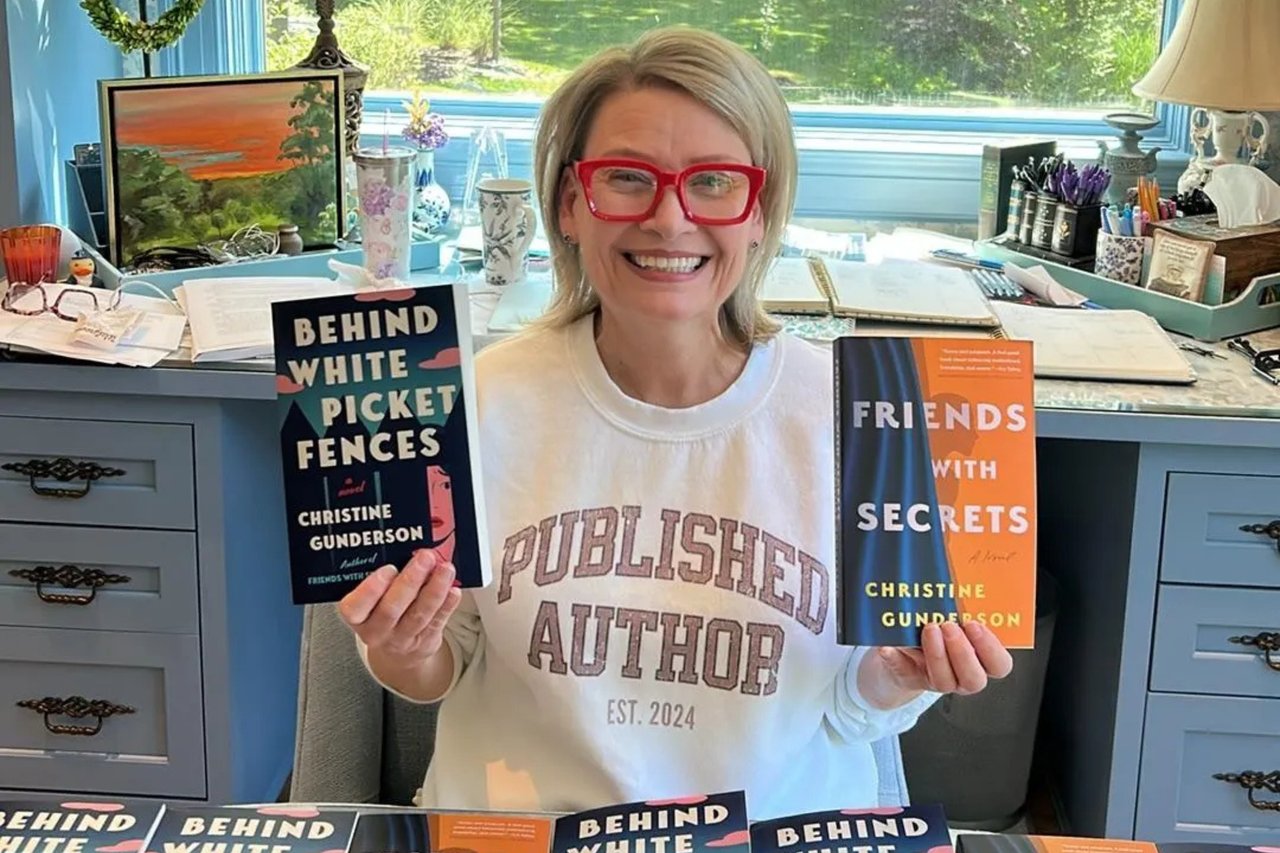
The Women Behind the White Picket Fence
An Interview with Author Christine Gunderson
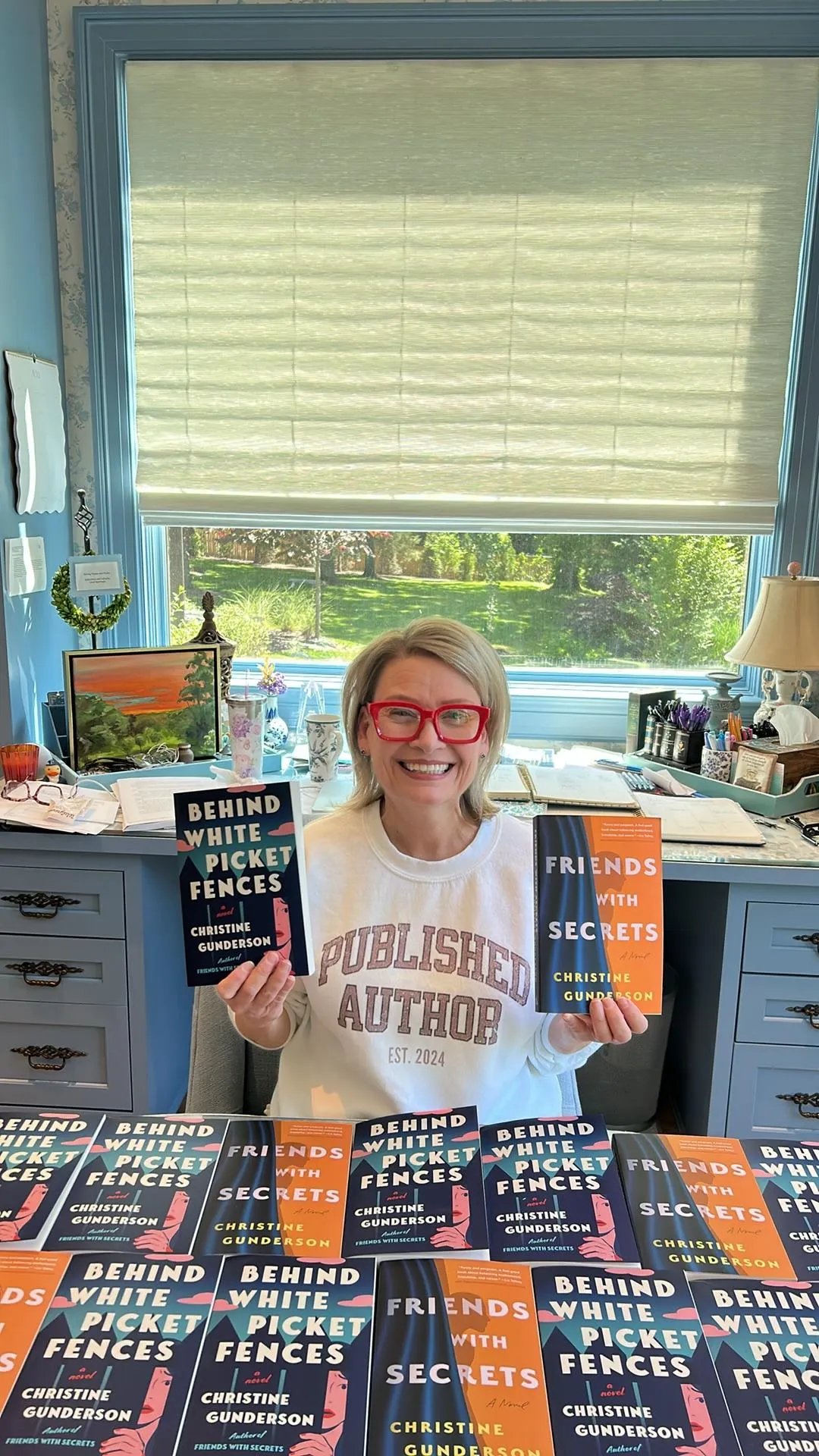
A year ago, when I sat down with Christine Gunderson to talk about her debut novel, Friends With Secrets, she was a first-time author hoping readers would connect with a story she'd spent years bringing to life.
This time felt different.
Friends With Secrets had found its audience. Readers across the country had embraced the novel, book clubs had invited Christine into their living rooms and libraries, and what began as a lifelong dream of becoming a published author had quickly grown into something much bigger. Her publisher had not only released her debut novel, but had also offered contracts for two more books, placing Christine on a writing schedule every aspiring novelist hopes for.
When we sat down again to celebrate the release of Behind White Picket Fences, I expected our conversation to revolve around the whirlwind of publishing a second novel. I asked what had changed the most since her first book hit shelves.
Christine laughed.
"I'd like to say I'm rich and famous... and taller and skinny," she jokes. "But none of those things have happened."
Instead, she tells me something else.
"The biggest change is that I have readers."
Not just readers, but relationships.
She talks about the countless book clubs she's visited throughout Northern Virginia and across the country, on Zoom. She describes evenings spent discussing characters, favorite scenes, and surprise endings, with women she'd never met before, but who somehow felt like old friends by the end of the night.
Then she tells me something that completely changes the direction of our conversation.
The real inspiration for Behind White Picket Fences didn't come while she was sitting at her desk.
It came while she was listening.
Again and again, as book club conversations drifted beyond the pages of Friends With Secrets, the women around the room began talking about their own lives. They laughed about carpools, overflowing calendars, youth sports, dance lessons, forgotten lunches, and the impossible balancing act of trying to be everything to everyone.
Eventually, someone would admit they were exhausted.
Then another woman would nod.
Then another.
One story, in particular, stayed with Christine.
Several mothers shared versions of the same experience. In the chaos of trying to get everyone where they needed to be, they'd had that heart-stopping moment every parent fears, realizing they'd accidentally left a child behind for a few terrifying minutes at an airport, a store, or somewhere along the endless shuffle of everyday life.
No one in the room judged them.
Instead, everyone understood.
It wasn't carelessness.
It was a sense of overwhelm.
For Christine, those conversations revealed something much bigger than a single parenting mishap. They exposed the invisible pressure so many mothers quietly carry, the constant feeling that they should be doing more, enrolling their children in one more activity, saying yes to one more opportunity, because that's what good parents are supposed to do.
"I kept hearing moms talk about how overwhelmed they were," Christine says. "The schedules, the extracurricular activities, trying to keep up with everything."
Those conversations followed her home.
By then, Christine already had a publishing contract for a second novel. She had submitted a proposal and the opening chapters months earlier, and she knew another story was waiting to be written. But the emotional center of that story crystallized only after sitting in room after room, listening to women describe lives that looked successful from the outside, but felt exhausting on the inside.
That became Behind White Picket Fences.
Set in Alexandria, Virginia, the novel follows three mothers who decide to do something almost unimaginable: step away from the endless cycle of activities that has consumed their families. As they begin reclaiming time they didn't realize they'd lost, they uncover a diary from 1965 that reveals long-buried neighborhood secrets, and offers an unexpected glimpse into another generation of motherhood.
The mystery may propel the novel, but Christine was after something deeper.
She wanted to ask a question that doesn't have an easy answer.
Has motherhood always felt this overwhelming?
Or have we quietly built a culture where doing more has become synonymous with loving more?
"The world is changing so fast," she says. "We don't really know what kind of future we're preparing our kids for. So we prepare them for everything."
It's a remarkably compassionate observation. Christine isn't criticizing today's parents. She's one of them.
She knows what it feels like to spend afternoons driving from one practice to another, wondering whether saying no to an opportunity today might somehow limit a child's future tomorrow. She understands why so many families keep running, even when they're exhausted.
She also wonders what we've lost along the way.
That question became one of the novel's quiet themes, explored through the lives of women separated by sixty years but connected by many of the same hopes, fears, and impossible expectations.
Ironically, Christine wrote much of Behind White Picket Fences while living the very life she was examining.
Forget the image of an author escaping to a secluded cabin.
Large portions of both of her novels were written in school parking lots, waiting outside practices, or in the quiet moments between dropping children off and picking them back up. When she wasn't writing from her car, she was writing before sunrise.
"My brain doesn't work after four in the afternoon," she laughs.
Instead, she wakes at four every morning, writing until her children wake up and the day begins. After school drop-off, she returns to the manuscript before shifting into the business side of being an author.
The discipline became essential after her publisher put her on a deadline. To finish the first draft, she gave herself what she jokingly calls a "1,000-word-a-day diet." When the story inevitably became tangled, she turned to one of her favorite tools: a tri-fold science fair board covered in colorful washi tape and index cards mapping every character and plot point.
It's delightfully low-tech for someone crafting intricate suspense novels.
The same warmth carries into the rest of our conversation.
Christine dreams of visiting Scotland, a destination that's remained at the top of her bucket list for years. When she's not writing, she's often reading, though rarely in just one format. A print book usually sits on her nightstand while an audiobook accompanies the more ordinary moments of the day, keeping her company while she's making dinner or tackling household chores.
Like many suspense writers, she's also an enthusiastic consumer of the genre. Lately, she's been captivated by Silo and enthusiastically recommends fellow local author Aggie Blum Thompson's latest domestic suspense novel, The Neighbors Are Watching.
Then there's the inevitable question every novelist gets asked: If you could spend a day living as one of your own characters, who would you choose? Christine doesn't hesitate.
"Ainsley," she says with a laugh. "She has this gorgeous house overlooking the Potomac River and lots of people to take care of everything."
It's the kind of answer that comes easily, the response of someone who's spent years imagining lives so vividly that they almost feel real!
Yet for all the fictional neighborhoods, carefully plotted mysteries, and unforgettable characters she creates, Christine never loses sight of the people she's really writing for.
When I ask what she hopes readers will take away from Behind White Picket Fences, she doesn't talk about the plot twists or whether they'll guess the ending. Instead, she imagines a woman settling into her favorite chair after a long day. Maybe the dishes are finally done. The house is quiet. For the first time all day, she has twenty uninterrupted minutes to herself.
"I want her to have a complete escape," Christine says. "I want her to be frantically turning the pages to see what happens next. I want her to feel seen, like I was eavesdropping on her life."
Then she pauses before adding one final thought.
"I want her to feel like the world is a just and good place."
It's a fitting hope for a novel born from listening. Long before Behind White Picket Fences became a story about neighborhood secrets, it was a story about women searching for room to breathe, questioning whether the pace of modern motherhood is sustainable, and wondering if there's another way forward. Christine didn't set out to answer those questions. She simply paid attention when readers began asking them.
Perhaps that's what makes her stories resonate. Beneath every mystery is a quiet recognition of the lives so many women are already living, reminding them that even behind the neatest white picket fence, no one is carrying life's burdens alone.
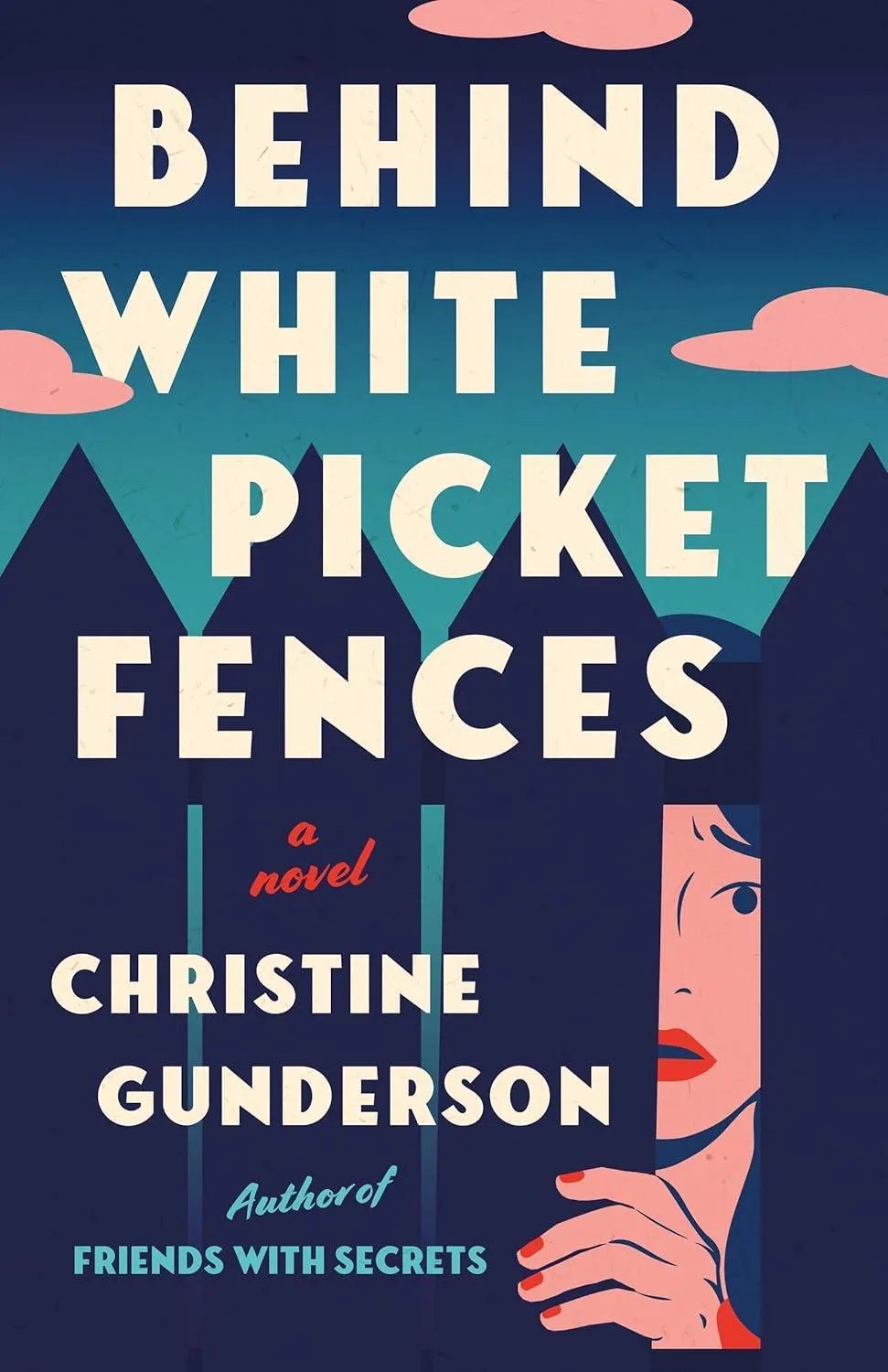
Get Your Copy Here!: https://christinegunderson.com/books/behind-white-picket-fences/